
How to Choose a Synthesis Coil Winding Machine in 2026?

Time:2026-09-16 Author:Madeline
0%

Choosing a Synthesis Coil Winding Machine in 2026 requires more than comparing speed and price. The right machine must match your coil geometry, wire diameter, insulation needs, and production volume. A compact laboratory setup may need flexible tooling, while an automotive supplier may require continuous operation and strict process control. Small details matter.

Begin with the winding results, not the brochure. Check programmable pitch, servo accuracy, tension stability, spindle range, and automatic wire handling. Ask the manufacturer for sample coils using your actual wire and former. Inspect the winding surface closely. Look for uneven layers, loose turns, damaged insulation, or inconsistent end positioning. These defects may appear minor but can increase rejection rates.

A reliable evaluation also includes software, maintenance, training, and traceability. The machine should record key settings and support repeatable production across different operators. Confirm spare-part availability, remote assistance, service response times, and applicable safety documentation. Review factory acceptance testing procedures and request references from similar industries. Measure twice. Buy once.

However, no specification sheet tells the whole story. A faster machine may create more waste if tension control is weak. A cheaper model may become expensive when changeovers take too long. Even experienced teams can overlook tooling costs or operator learning curves. Therefore, compare total ownership costs over several years, not only the purchase price. This guide explains the practical questions that can help you choose confidently, while recognizing that every factory has different priorities, limits, and occasional surprises.
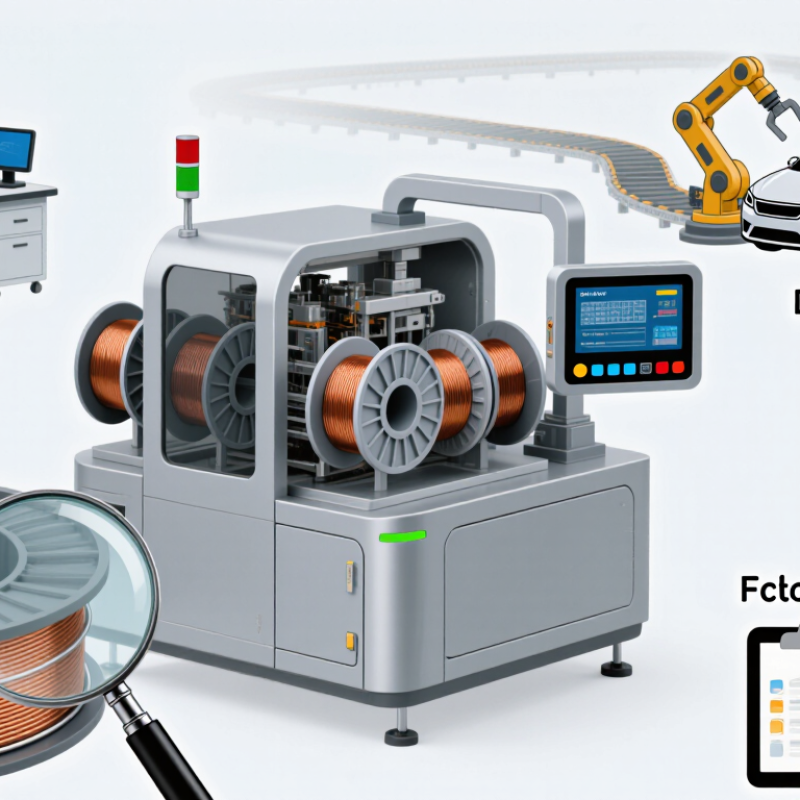
How to Choose a Synthesis Coil Winding Machine in 2026?

What a Synthesis Coil Winding Machine Is and How It Works

How to Choose a Synthesis Coil Winding Machine in 2026?

A synthesis coil winding machine integrates wire feeding, tension control, guiding, winding, and inspection. It builds a coil around a mandrel, former, or stator tooth. A servo-driven flyer or needle places each turn accurately. The controller synchronizes rotation, traverse movement, and wire tension. Sensors detect breaks, slack, and irregular layers during production. The process looks simple. It is not.

According to the International Energy Agency’s Global EV Outlook 2025, global electric car sales exceeded 17 million in 2024. This growth increases demand for compact, repeatable motor coils. A machine should therefore support programmable winding patterns, quick tooling changes, and traceable quality records. Practical trials matter more than impressive brochures. Measure wire tension, coil geometry, cycle time, and rejection rates using your actual materials. A supplier’s laboratory result may not match your factory floor.

The 2026 choice should also reflect the coil’s insulation system and wire diameter. Fine wire needs gentler acceleration and more stable tension. Thick wire requires stronger guiding components and controlled braking. Industry 4.0 reports from the International Federation of Robotics show continuing growth in industrial automation, but automation alone cannot fix poor process settings. Leave room for adjustment. Even experienced operators sometimes overlook heat, vibration, or changing wire batches. Check maintenance access, software records, safety functions, and operator training before approving the machine.

Key Machine Types and Their Suitable Winding Applications

How to Choose a Synthesis Coil Winding Machine in 2026?

Choosing a synthesis coil winding machine starts with the coil design, not the machine’s advertised speed. A precision winding machine suits multilayer coils with controlled pitch and repeatable turn counts. It works well for sensors, inductors, and compact transformer windings. A flyer winding machine handles larger wire and heavier bobbins. It is practical for motors, reactors, and industrial coils requiring strong tension control. For ring-shaped cores, a toroidal winding machine provides even coverage around the core. This design reduces manual repositioning and improves insulation consistency.

Check the wire diameter range, tension accuracy, spindle capacity, and programmable turn control. A machine may claim high speed, but excessive acceleration can damage thin enamel insulation. I have seen production trials fail because the operator ignored wire memory after storage. That small detail mattered. Ask for sample winding tests using your real core, wire, and insulation layers. Inspect the finished coil under magnification. Look for crossed turns, loose edges, and uneven spacing. Also verify maintenance access, calibration records, safety guarding, and operator training. A cheaper machine can become expensive when setup changes take hours.

Tips: Record actual winding time, not only rated speed. Test at low, medium, and maximum tension. Leave room for future coil sizes. If the machine needs constant manual correction, the selected type is probably wrong. Document every setting, even imperfect ones. That record helps technicians find the cause when quality drifts.

How to Choose a Synthesis Coil Winding Machine in 2026? - Key Machine Types and Their Suitable Winding Applications

This engineering selection guide shows whether each machine type is commonly suitable for major coil-winding applications. A value of 1 indicates a typical application match, while 0 indicates that the machine is generally not the standard choice. Spindle and flyer winding machines are widely used for bobbin-based coils, needle winding machines are commonly selected for concentrated stator windings, toroidal machines are designed for toroidal cores, and linear winding machines are suitable for long solenoid-style coils.

Essential Specifications for Comparing Machine Performance

How to Choose a Synthesis Coil Winding Machine in 2026?

When comparing a synthesis coil winding machine, start with measurable specifications, not impressive speed claims. Check wire diameter range, spindle speed, winding pitch, tension control, and positioning accuracy. IEC 60034-2-1 supports standardized motor testing, so machine data should connect with finished-motor performance. A useful specification sheet should also show acceleration time and stable speed under load.

Production evidence matters more than laboratory numbers. The International Energy Agency’s Global EV Outlook 2025 reported nearly 17 million electric car sales in 2024. It also expects sales to exceed 20 million in 2025. This growth increases demand for repeatable stator and transformer winding processes.

Ask suppliers for verified cycle time, first-pass yield, changeover time, and reject rates using your actual wire and coil design. A machine running at 3,000 rpm may perform poorly with thin wire, sharp corners, or frequent recipe changes. That detail is often overlooked.

Tips: Request a live trial with your materials. Measure tension variation, wire damage, coil height, and operator setup time. Confirm data logging, alarm history, recipe control, and calibration records. ISO 22400 defines manufacturing performance indicators, including overall equipment effectiveness. Use those indicators during acceptance testing. A perfect spreadsheet can still mislead. Real production is less tidy. Evaluate maintenance access, spare-part availability, noise, energy use, and safety functions before approving the machine.

How to Match Machine Features with Production Requirements

How to Choose a Synthesis Coil Winding Machine in 2026?

Choosing a synthesis coil winding machine in 2026 starts with production requirements, not a feature list. Define wire diameter, coil dimensions, winding pitch, daily output, and acceptable variation. A laboratory prototype may need flexible tooling, while continuous production needs stable tension and fast changeovers. Measure the actual work area around the machine. Operator access matters. It is easy to underestimate maintenance space.

Match each requirement to a measurable machine capability. Ask for the tension-control range, spindle-speed stability, programmable turns, and tooling compatibility. For fine wire, inspect tension response during acceleration, not only its advertised minimum. For larger coils, check low-speed torque and winding-head rigidity. Review the control screen with operators who will use it daily. A complicated interface can reduce output, even when specifications look impressive. Request sample winding data, including start-stop accuracy, rejected coils, and setup time.

Tips: Build a small acceptance test before purchasing. Wind several coil sizes using your actual wire, insulation, and former. Record wire breaks, overlaps, temperature, noise, and changeover minutes. Compare the results with written tolerances. If the machine performs only with an experienced technician, reconsider the training burden. Leave spare capacity for future products, but avoid excessive capability. It can waste floor space and capital. A practical choice may feel less exciting. Repeatable results matter more than a crowded feature list.

Safety, Maintenance, and Long-Term Operating Considerations

How to Choose a Synthesis Coil Winding Machine in 2026?
Safety, Maintenance, and Long-Term Operating Considerations

When evaluating a synthesis coil winding machine, I inspect safety before speed. A guarded winding area should prevent hand access during rotation. Emergency stops must remain visible, reachable, and easy to test. Interlocks should stop movement when a cover opens. Insulation damage, loose wires, and exposed terminals deserve immediate attention. Do not trust a clean exterior. Ask for risk assessments, electrical documentation, and operator training records. These details show whether safety is built into daily work.

Maintenance affects both output quality and employee confidence. Choose equipment with accessible tension systems, clear lubrication points, and replaceable wear parts. Dust around the spindle can change winding accuracy surprisingly quickly. Keep a maintenance log with dates, readings, faults, and corrective actions. Calibration should follow a defined schedule, not someone’s memory. I once underestimated setup drift after repeated coil changes. That mistake caused avoidable rework. Regular checks would have exposed it earlier.

Long-term value depends on more than the purchase price. Review energy use, software support, spare-part availability, and technician response times. A machine that needs specialist service for every minor fault can become expensive. Test the controls with actual operators, including people with limited experience. Their feedback often reveals awkward reach distances or confusing alarms. Consider noise, lighting, posture, and cleaning access during an entire shift. Reliable equipment should support careful work, not demand constant improvisation.

How to Choose a Synthesis Coil Winding Machine in 2026? - Safety, Maintenance, and Long-Term Operating Considerations
Evaluation Dimension Recommended Specification or Practice Why It Matters for Synthesis Coil Winding Verification Checklist Priority
Machine Guarding Use fixed guards around rotating shafts, chucks, belts, gears, and accessible pinch points. Access doors should be interlocked where practical. Coil winding involves rotating components, moving wire, and tension forces that can create entanglement or pinch hazards.
  • Inspect guards before operation.
  • Confirm that opening an interlocked door stops hazardous motion.
  • Check that guards cannot be removed without tools.
Essential
Emergency Stop System Provide clearly marked, easily accessible emergency-stop devices at the operator position and other foreseeable access points. An emergency stop allows the operator to stop winding motion quickly during wire breakage, entanglement, abnormal vibration, or component failure.
  • Test each emergency stop during scheduled inspections.
  • Verify that a reset does not cause automatic restart.
  • Keep emergency-stop controls unobstructed.
Essential
Electrical Safety Choose a machine with a documented electrical control system, suitable overcurrent protection, protective earthing, and a lockable main isolator. Reliable electrical protection reduces the risk of electric shock, control-system damage, and fire caused by short circuits or overloads.
  • Confirm the supply voltage and frequency before installation.
  • Check protective-earth continuity.
  • Require qualified personnel for electrical maintenance.
Essential
Wire-Tension Control Use closed-loop or consistently adjustable tension control appropriate for the wire diameter, insulation, and coil geometry. Stable tension improves layer uniformity, reduces wire breakage, and helps prevent insulation damage during high-speed winding.
  • Review the usable tension range for the intended wire sizes.
  • Run a sample coil at low, medium, and target speeds.
  • Inspect the wire for scuffing, stretching, and insulation cuts.
Essential
Speed Range and Acceleration Select a variable-speed drive with controlled acceleration and deceleration rather than relying only on a fixed high-speed setting. Gradual speed changes reduce wire shock, coil deformation, and mechanical stress on the spindle, chuck, and traverse mechanism.
  • Confirm the minimum stable speed for start-up and threading.
  • Check whether speed limits can be configured by product recipe.
  • Observe vibration during acceleration and stopping.
Essential
Spindle and Chuck Capacity Choose spindle torque, rated speed, chuck dimensions, and allowable workpiece mass with sufficient margin for the largest planned coil. Operating continuously at the mechanical limit can accelerate bearing wear, increase vibration, and reduce winding accuracy.
  • Compare the largest coil diameter and width with the machine limits.
  • Check maximum workpiece mass and moment of inertia.
  • Allow operating margin for future product variations.
Essential
Traverse Accuracy Use a programmable traverse system with repeatable positioning and settings for pitch, winding direction, start position, and layer transitions. Accurate wire placement is important for consistent coil dimensions, electrical performance, and repeatable synthesis or test results.
  • Measure pitch consistency across a trial coil.
  • Check backlash and smooth movement across the full traverse.
  • Verify recipe repeatability after power cycling.
Essential
Operator Interface Prefer a clear interface with password-protected parameters, alarm history, recipe storage, and status indications for tension, speed, and safety circuits. Controlled access reduces accidental parameter changes and makes troubleshooting, training, and production repeatability easier.
  • Check whether critical settings require authorization.
  • Review alarm descriptions and recovery instructions.
  • Confirm that recipes can be backed up.
Important
Wire-Break and Overload Detection Include detection for wire breakage, excessive tension, spindle overload, door opening, and abnormal drive conditions. Automatic stopping limits product damage and helps prevent loose wire, entanglement, and mechanical overload.
  • Test each alarm with a controlled procedure.
  • Confirm that the machine stops in a predictable state.
  • Check whether fault events are recorded.
Essential
Noise and Vibration Evaluate the machine at idle, medium speed, and maximum planned operating speed. Avoid equipment with unexplained resonance or excessive vibration. Noise and vibration can indicate imbalance, bearing wear, loose fasteners, poor alignment, or unsuitable installation conditions.
  • Compare vibration before and after a sustained test run.
  • Inspect spindle bearings, couplings, and mounting bolts.
  • Use hearing protection where workplace noise assessment requires it.
Important
Preventive Maintenance Access Choose a layout that allows safe access to lubrication points, tension components, sensors, belts, filters, electrical cabinets, and wear parts. Easy access shortens maintenance time and makes scheduled inspections more likely to be completed correctly.
  • Request the maintenance manual and service intervals.
  • Check whether routine tasks can be performed without removing major assemblies.
  • Identify required tools and lifting equipment.
Essential
Lubrication Requirements Use specified lubricants and documented intervals for bearings, linear guides, gearboxes, or other lubricated components. Correct lubrication reduces friction, heat, noise, and premature wear. Over-lubrication can also damage seals or contaminate nearby components.
  • Record lubricant type and application date.
  • Inspect for leaks, contamination, and abnormal temperature.
  • Follow the equipment manual rather than using a generic schedule.
Important
Calibration and Measurement Provide a method to verify wire tension, spindle speed, traverse position, and relevant dimensional outputs at defined intervals. Calibration supports repeatable coil production and helps identify gradual drift before it causes a large batch of nonconforming coils.
  • Define calibration frequency based on use and risk.
  • Use traceable reference instruments where required.
  • Keep calibration and adjustment records.
Essential
Spare Parts Availability Confirm the expected availability of wear parts such as guides, tension rollers, belts, sensors, fuses, bearings, and chuck components. Long-term operating cost is strongly affected by downtime and the time required to obtain common replacement parts.
  • Identify critical spares before commissioning.
  • Ask for part numbers and recommended stock levels.
  • Check whether equivalent parts can be sourced locally.
Essential
Software and Control-System Support Require documented backup and restoration procedures for recipes, parameters, motion settings, and safety-related configuration. Loss of settings after a controller replacement or storage failure can create extended downtime and inconsistent production.
  • Back up configurations after commissioning and major changes.
  • Store backups in a controlled location.
  • Restrict software changes to authorized personnel.
Important
Energy Consumption Compare motor power, standby consumption, compressed-air demand, and expected operating hours under the intended production schedule. Energy use contributes to operating cost and may affect facility capacity, heat generation, and environmental targets.
  • Request electrical-load data for normal operation.
  • Check whether compressed air is required continuously.
  • Consider automatic standby or shutdown functions.
Important
Environmental Conditions Verify allowable ambient temperature, humidity, dust exposure, floor stability, lighting, and ventilation for the proposed installation area. Unsuitable environmental conditions can affect insulation, electronics, lubrication, sensors, and operator safety.
  • Compare site conditions with equipment specifications.
  • Protect the machine from conductive dust and moisture.
  • Provide adequate working space around access panels.
Essential
Training and Documentation Obtain operating, maintenance, troubleshooting, electrical, pneumatic, and safety documentation in a language understood by the users. Good documentation reduces unsafe work practices, setup errors, and dependence on a single experienced operator.
  • Train operators on setup, threading, alarms, and emergency procedures.
  • Train maintenance staff on isolation and servicing.
  • Keep current manuals accessible near the machine.
Essential
Total Cost of Ownership Evaluate purchase cost together with installation, tooling, consumables, energy, preventive maintenance, calibration, training, spare parts, and expected downtime. A lower initial price may lead to higher long-term costs if the machine requires frequent adjustment, has limited support, or uses proprietary wear parts.
  • Prepare a multi-year cost estimate.
  • Include planned maintenance and likely replacement parts.
  • Compare expected uptime and service response time.
Essential
Acceptance Testing Complete a documented trial using representative wire, coil dimensions, winding patterns, production speed, and safety functions before final acceptance. Testing under realistic conditions verifies that the machine meets technical, safety, quality, and maintainability requirements.
  • Define measurable acceptance criteria in advance.
  • Inspect coil dimensions, winding placement, tension stability, and surface condition.
  • Record safety-test results and corrective actions.
Essential

Note: The specifications shown are general selection criteria and typical engineering practices. Final requirements should be confirmed against the machine documentation, applicable workplace-safety regulations, electrical codes, and the specific wire and coil design.

FAQS

How should I choose a synthesis coil winding machine?

Start with the coil design, wire size, core shape, and required turn count. A precision machine suits multilayer coils and controlled pitch. A flyer machine handles larger wire and heavier bobbins. The fastest machine is not always the best choice.

Which machine suits ring-shaped cores?

A toroidal winding machine provides even coverage around ring-shaped cores. It reduces manual repositioning during production. This can improve insulation consistency. Small alignment errors still happen.

What specifications should I check before buying?

Check the wire diameter range, tension accuracy, spindle capacity, and programmable turn control. Leave capacity for future coil sizes. Review maintenance access and calibration records. Rated speed alone proves very little.

Why should I test the machine with real materials?

Request sample tests using your actual core, wire, and insulation layers. Test low, medium, and maximum tension settings. Inspect the finished coil under magnification. Look for crossed turns, loose edges, and uneven spacing. That small test can reveal expensive problems.

Can high acceleration damage delicate wire?

Yes, excessive acceleration can damage thin enamel insulation. Stored wire may also retain memory and resist smooth placement. I once overlooked this issue during a production trial. The result was avoidable rework. The lesson remains useful.

What safety features should the machine include?

The winding area should have guards that prevent hand access during rotation. Emergency stops must remain visible, reachable, and easy to test. Interlocks should stop movement when a cover opens. Inspect insulation, loose wires, and exposed terminals immediately. A clean exterior proves nothing.

How can maintenance protect winding quality?

Choose equipment with accessible tension systems, lubrication points, and replaceable wear parts. Dust around the spindle can quickly affect winding accuracy. Keep records of dates, readings, faults, and corrective actions. Schedule calibration instead of relying on memory. That habit matters.

What long-term costs should I consider?

Review energy use, software support, spare-part availability, and technician response times. Setup changes may take hours on poorly matched equipment. Test the controls with actual operators during a full shift. Check noise, lighting, posture, cleaning access, and confusing alarms. I may be too cautious, but awkward controls create real delays.

Conclusion

Choosing the right Synthesis Coil Winding Machine in 2026 requires more than comparing price or winding speed. These machines form coils by guiding wire onto a controlled path, with tension, alignment, rotation, and programming working together to achieve consistent results. Different machine types suit different applications, including prototypes, small batches, high-volume production, fine-wire coils, and larger or more complex winding structures. Key specifications to compare include winding speed, wire-size range, tension control, positioning accuracy, spindle capacity, automation level, changeover time, and compatibility with required coil dimensions.

The best choice should match actual production requirements, such as daily output, product variation, workforce skills, available floor space, and future expansion plans. Operators should also evaluate guarding, emergency stops, electrical protection, noise control, and ease of access for safe operation. Reliable maintenance support, accessible wear parts, clear operating procedures, and useful diagnostic functions can reduce downtime and extend service life. A carefully selected machine should provide stable quality, practical flexibility, efficient operation, and predictable long-term ownership costs.

Madeline

Madeline

Madeline is a dedicated marketing professional with a wealth of expertise in our company's core offerings. With a keen understanding of the industry, she brings a unique perspective to her role, consistently delivering high-quality content that highlights the superior aspects of our products. As......